Dial in every shot.
Lose none of them.
The structured dial-in workflow most baristas wish their espresso log had. Dose, yield, time, taste, smart grind suggestions — and an instant lookup of the recipe that worked last time. Free on iOS.

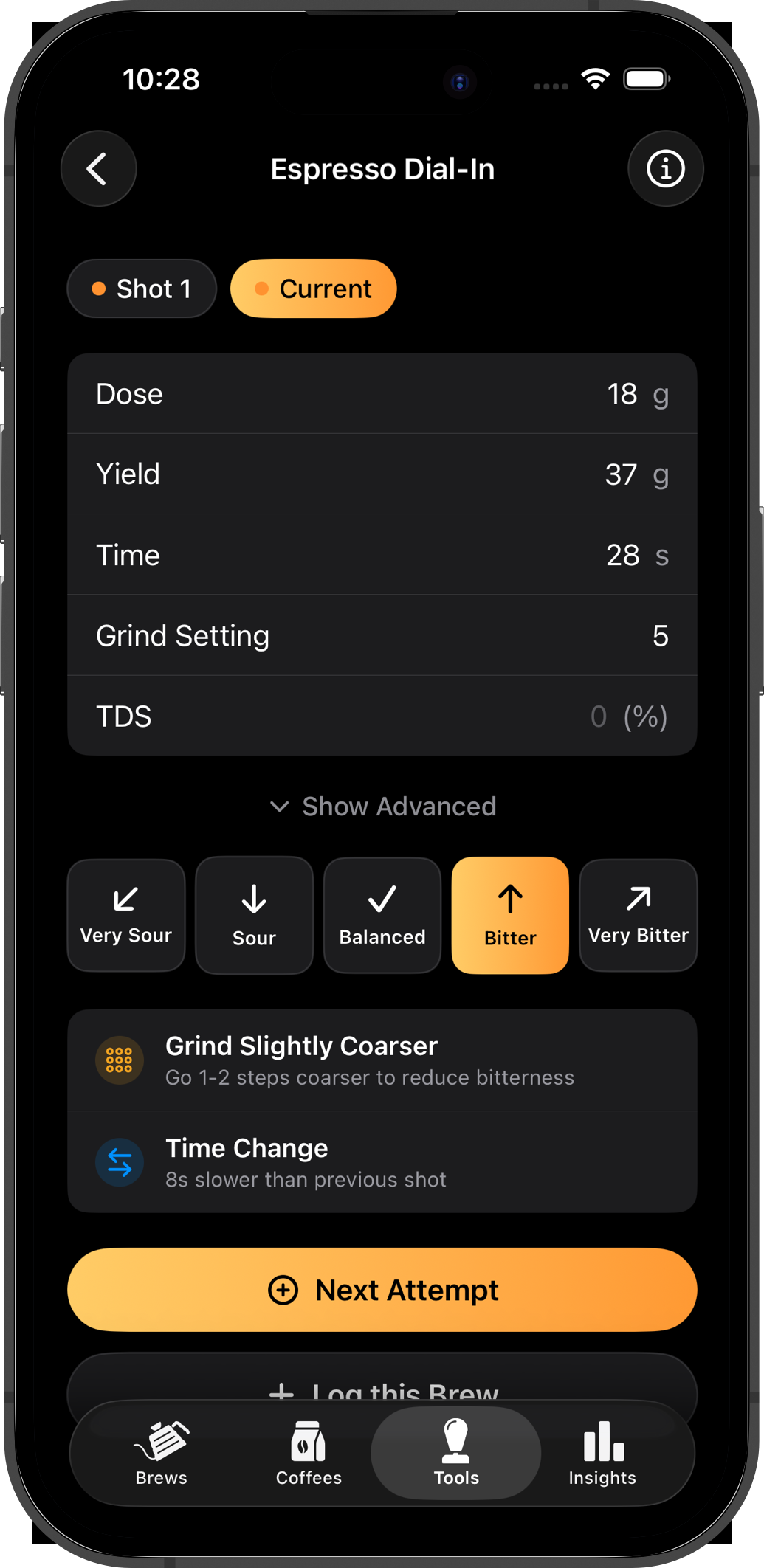
Espresso dialling in is the process of adjusting grind, dose, and yield until a coffee tastes balanced — sweet, with no sourness or bitterness — on your machine. It takes 3–5 shots when tracked, and 8–12 when not.
Why most home setups dial in the slow way
The dial-in process itself is well-known. The friction is in the memory. Without a log, every new bag starts from scratch — you remember the rough grind setting, maybe the dose, never the time. The third shot fixes the second shot's problem; the fourth shot has drifted again because the grinder shifted half a notch in cleaning. The bag is half-empty before you find the recipe, and you've taken zero notes that survive into the next bag.
A dial-in app fixes one specific thing: it turns a sequence of shots into a structured progression you can read back. Each shot has a taste tag (sour, balanced, bitter), a grind setting, a recipe, and a recommendation for what to try next. The "good" shot is marked. The next bag starts where the last one ended.
The dial-in loop, in six steps
- Pick a starting recipe. 1:2 is the default for modern light-to-medium roasts. 18 g in, 36 g out, 25–30 seconds.
- Pull the shot. Distribute, tamp, lock in. Start the shot and timer at the same instant. Cut when the scale hits target yield.
- Taste honestly. Pick the dominant flaw. Sour & thin? Under-extracted. Bitter & dry? Over-extracted. Balanced but flat? Adjust ratio.
- Adjust grind, not recipe. One notch at a time. Finer for under, coarser for over. Keep dose and yield constant so you isolate the variable.
- Repeat. 3–5 shots is normal. Log each one with grind, taste, and time so the progression is visible.
- Save the reference. Once a shot lands, mark it as the reference brew for that coffee. Next bag, you start there.
Taste-to-action cheat sheet
| Taste signal | Likely cause | Next adjustment |
|---|---|---|
| Sour, weak, salty | Under-extracted | Grind finer (1 notch) |
| Bitter, hollow, dry | Over-extracted | Grind coarser (1 notch) |
| Sour and bitter | Channelling | Improve distribution, re-tamp |
| Watery, fast pour | Grind too coarse | Grind finer 2 notches |
| Choked, no flow | Grind too fine | Grind coarser 2 notches |
| Balanced but flat | Ratio not extraction | Try 1:2.2 or 1:1.8 |
What HomeBarista adds to the loop
- Structured dial-in sessions. Each attempt is part of a session. The progression — grind, dose, time, yield, taste — sits side-by-side so you can see exactly which adjustment moved the cup.
- Smart adjustment suggestions. Pick a taste tag and the app suggests the next grind move. You override anything; the recommendation just removes the guesswork at 6 a.m.
- Reference shots per coffee. Save the dialled-in recipe to the bag. Next morning, it's the default — no scrolling, no guessing where you landed.
- Extraction calculator on top. If you own a refractometer, plug TDS into the same shot record and see exactly where the cup sits on the SCA curve. More on extraction →
- 25+ parameters per shot. Pressure, flow rate, temperature, basket size, puck prep — log as much or as little as you want; only dose, yield, and time are required.
Stop redialling the same bag every morning.
HomeBarista keeps the recipe that worked yesterday one tap away.
Frequently asked questions
What does dialling in espresso mean?
Dialling in espresso is the process of adjusting grind size, dose, yield, and time to find the recipe that makes a particular coffee taste its best on your machine. Every new bag — and often every humid day — needs dialling in because grind density and bean behaviour shift.
How do I know if my espresso is under-extracted or over-extracted?
Under-extracted espresso tastes sour, sharp, weak, and salty. Over-extracted espresso tastes bitter, hollow, dry, and astringent. A well-extracted shot tastes sweet, balanced, and lingers pleasantly.
What is the standard espresso ratio?
1:2 — 18 g of dry coffee, 36 g of liquid espresso, 25–30 seconds. Ristretto is roughly 1:1 to 1:1.5. Lungo is 1:2.5 to 1:3.
Should I adjust grind or dose when dialling in?
Hold dose constant and adjust grind first. Dose changes strength and texture; grind changes extraction. Isolate one variable per shot for fastest convergence.
How many shots does dialling in usually take?
A well-tracked dial-in usually lands in 3–5 shots. Without a log, baristas often burn through 8–12 shots and then lose the spot the next day because nothing was written down.
How does HomeBarista's espresso dial-in tool work?
Pick a starting recipe, log each shot with dose, yield, time and a taste tag (sour, balanced, bitter, etc.), and HomeBarista suggests the next grind adjustment. Best shots can be marked as the reference for that coffee so the next bag starts there.